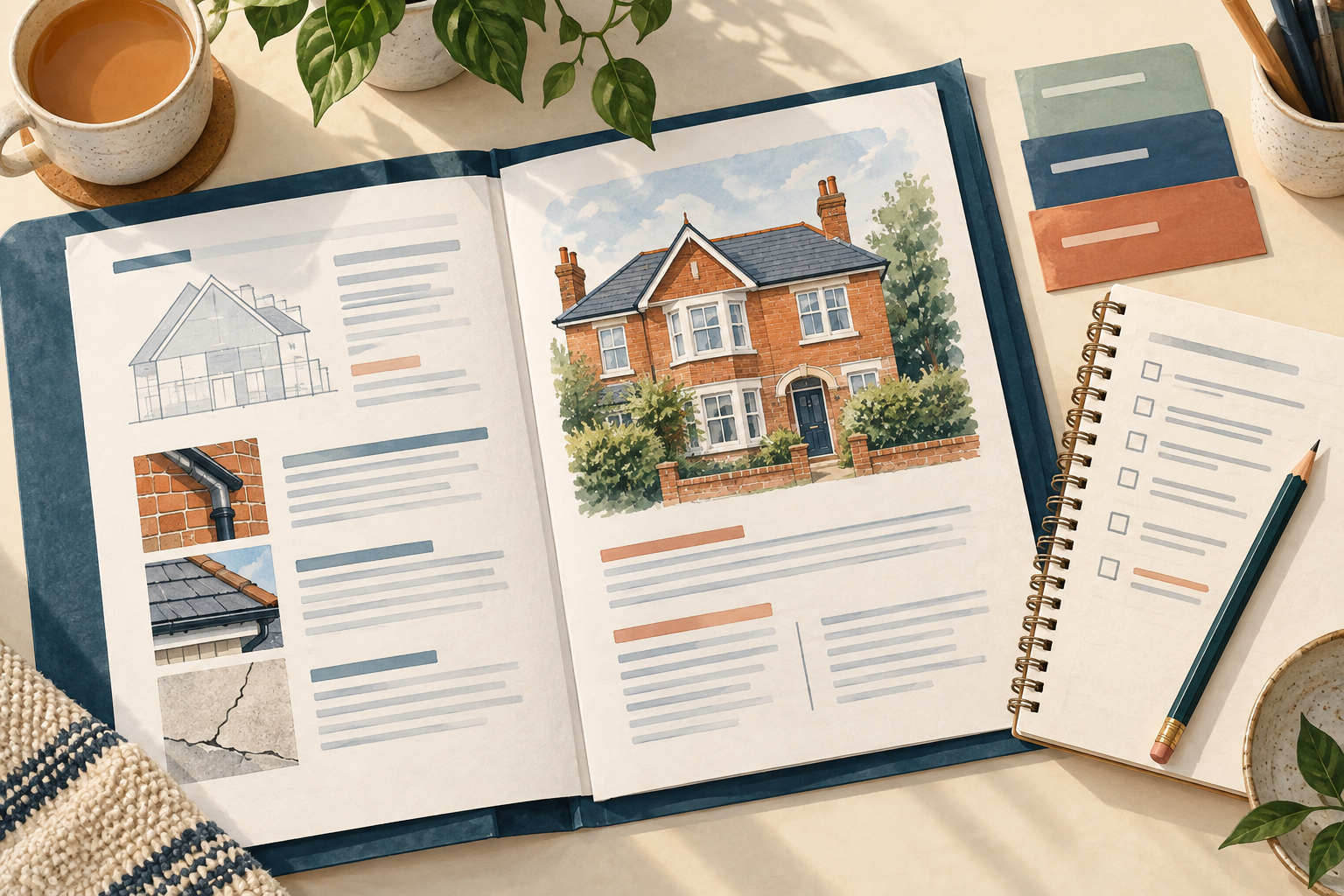
Published 13 October 2026
Opening a Level 2 survey can feel unsettling, especially when you have already pictured yourself living in the house. A page of warnings deserves careful attention, but counting red boxes is not a useful way to make your decision. Start by understanding what each finding means and what information you still need.
For buyers in Greater Manchester and nearby Cheshire, this guide offers a practical way to prepare for a conversation with your surveyor. It does not decide whether a particular property is suitable for you.
Read the rating alongside the explanation
RICS describes its Level 2 condition ratings broadly as follows:
- Rating 1: no repair is currently required; normal maintenance remains necessary.
- Rating 2: repair or replacement is needed, but the defect is not considered serious or urgent.
- Rating 3: a serious defect and/or an urgent need for repair, replacement or investigation.
- NI: the element was not inspected.
A rating 3 needs attention, not reassurance based on a general article. RICS advises obtaining written repair quotations before committing legally to purchase for these findings. Read the associated description, risks and recommended next steps together.
Notice what remains unknown
A Level 2 inspection covers accessible, visible areas without opening up the building. It does not include specialist testing of services. Further investigation may be recommended where the surveyor cannot reach a confident conclusion.
Ask which uncertainties matter to your decision and who should investigate them. An inaccessible area is not evidence that it is sound. Equally, do not invent a diagnosis from a short phrase or photograph.
Make a one-page question sheet
Rather than forwarding a screenshot of the most alarming sentence, keep the complete report available and prepare a short list. For each concern, write down the section reference, the surveyor’s wording and your question.
Useful questions include:
- What did you observe, and what possible explanation still needs checking?
- What action do you recommend, and how urgently?
- Which professional should carry out the next assessment?
- What access or permission will they need?
- What information would allow a repair quotation to be prepared?
Leave space for the answer, the person responsible and a target date. This creates a practical record you can share with your advisers instead of trying to remember several telephone conversations.
Keep the property details attached
If you are comparing a terrace in Stockport with a semi-detached home in Bury, keep separate folders for each property. Label documents with the address and date so that photographs, quotations and survey comments do not become mixed up.
Record any access restrictions already mentioned in the report. When arranging a follow-up visit through the selling agent, send the relevant questions in advance and ask for the agreed scope in writing. Do not assume that a brief visit will answer every outstanding point.
Separate questions from prices
Begin with a clear description of the work or investigation being discussed. Then ask what any proposed price covers and what remains excluded. Keep provisional allowances separate from written quotations so that your notes do not turn an estimate into a promise.
Our survey repair-cost guide explains the purpose and limits of reviewing repair budgets. Casa’s remote Survey Cost Review uses your existing report to provide indicative allowances; it does not check the property on site or replace specialist advice.
Choose the right follow-up
For visible building concerns, Casa’s builder-led home inspections can provide practical follow-up within an agreed scope. They are not RICS surveys, structural engineer reports or specialist tests. If your survey recommends a particular specialist, follow that recommendation rather than assuming a general inspection will answer it.
To request a home inspection, provide the property location, your report and the questions you want addressed. Casa will confirm scope and fee before arranging the appointment.
You do not need to settle every concern in the first evening after receiving the report. Aim to finish that first reading with a clear list of findings, unanswered questions and people to contact. Take the report seriously, seek clarification and base your next decision on the evidence gathered.
Source
Condition ratings and inspection scope checked on 13 October 2026 against RICS, “Description of the RICS Home Survey – Level 2 (survey only)”: https://www.rics.org/content/dam/ricsglobal/documents/standards/description_of_the_rics_home_survey_level_2.pdf