Published 3 November 2026

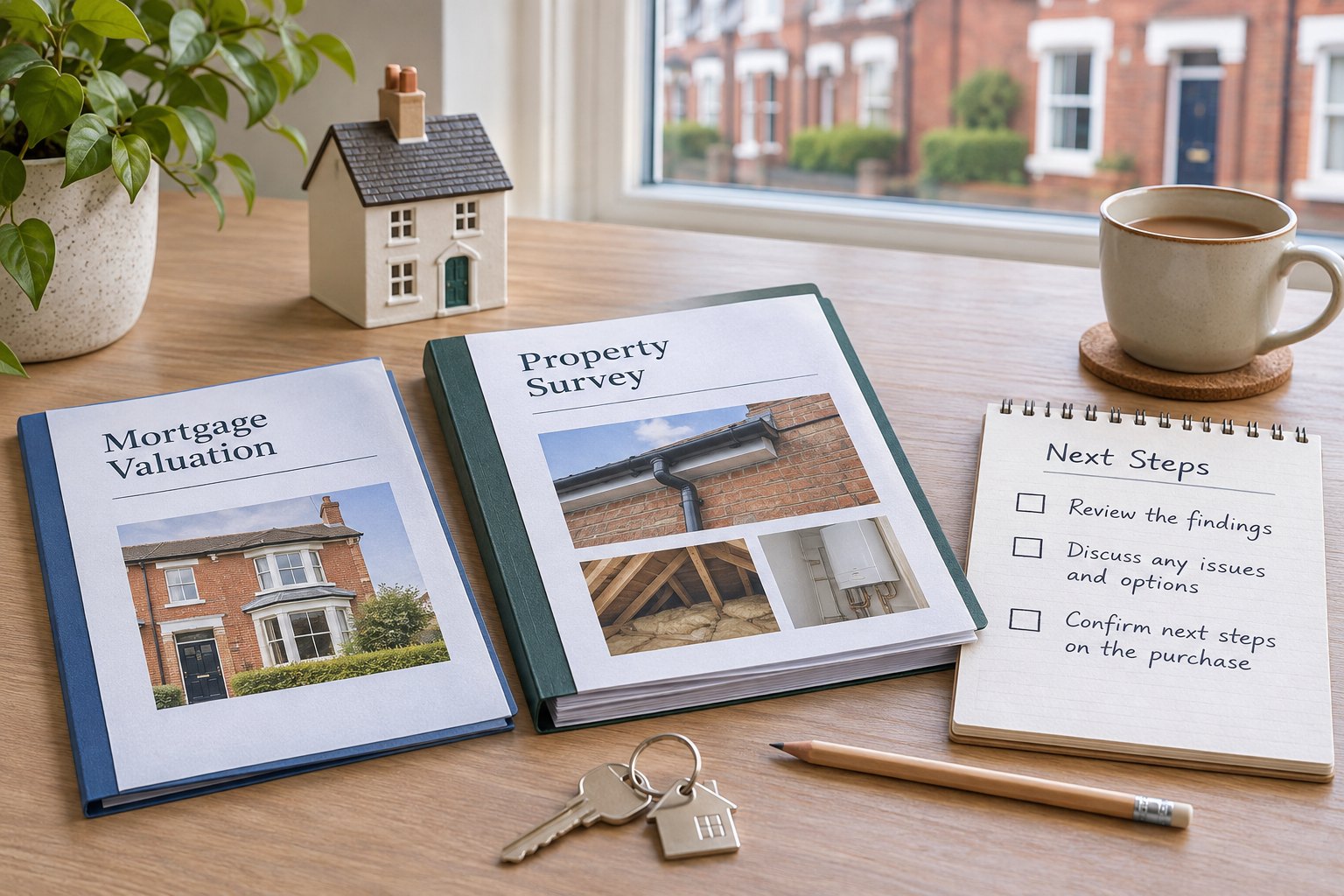
Mortgage paperwork sometimes calls the lender's check a “valuation survey”. That wording can lead buyers to assume the property has already received a detailed condition inspection. It has not.
A mortgage valuation and a home survey have different clients, purposes and levels of detail. Understanding the difference before exchange of contracts can help you avoid relying on a lender's decision as evidence that the home has no significant defects.
What is a mortgage valuation?
The mortgage provider arranges a valuation to decide whether the property is suitable security for the amount it may lend. The lender is the client for that work, even where the buyer pays a fee.
The process may involve a physical visit, but it can also be completed using a desktop or automated valuation. You may receive only limited information, or no full report. A mortgage offer means the lender is prepared to proceed on its terms; it does not confirm that the roof, drainage, electrics, structure or other building elements are in satisfactory condition.
GOV.UK is explicit that a mortgage valuation is not a survey and does not protect the buyer if something goes wrong with the property. Treat it as one part of the mortgage application rather than a property health check.
What does a home survey do?
A home survey is arranged for the buyer to assess the property's condition within an agreed level of service. The surveyor reports visible defects, risks, maintenance matters and areas where further investigation or advice may be needed.
RICS offers different survey levels. The appropriate choice depends on factors such as the property's age, construction, condition, alterations and the work you may be planning. A conventional home in reasonable condition may need a different level of detail from an older, unusual or heavily altered building.
Our guide to surveys and home inspections explains how a broad professional survey differs from a narrower, builder-led visual follow-up. Neither service should be expected to expose every concealed defect, and every report should be read with its access and inspection limitations.
Can the lender's valuer identify a problem?
A valuation can take account of matters that affect value or the lender's security. The lender may ask for further information, retain part of the loan until specified work is completed, reduce the valuation or decide the property falls outside its lending criteria.
That does not turn the valuation into a detailed report for the buyer. A significant defect may be outside the valuation's scope, particularly where the assessment is remote or limited. Do not assume that “the valuation passed” means no repair or investigation is needed.
If the property is valued below your agreed price, speak to your lender or mortgage adviser about the effect on the proposed loan. Discuss your legal position and any negotiation with your conveyancer. A lower valuation and a building defect are related only where the evidence shows they are; one should not be used to invent the other.
What should you arrange and when?
After your offer is accepted, ask the lender exactly what valuation it is arranging and whether you will receive a copy. Separately, discuss the property with a suitably qualified surveyor and choose the survey level on the property's characteristics rather than assuming the lender's check is enough.
Read the complete report and raise questions with the surveyor. Our Level 2 survey warnings guide shows how to organise condition ratings, limitations and recommendations without losing the context of the full document.
Where a survey recommends advice from a structural engineer, electrician, drainage specialist or another professional, keep that recommendation visible. A general visual inspection or repair estimate should not be used to dismiss it.
Using Casa after the survey
If you already have a Level 2 or Level 3 report and want help understanding indicative repair allowances, Casa's UK-wide Survey Cost Review may be suitable. It is a remote review of the report supplied; it does not inspect the property or replace specialist advice.
For agreed visible concerns at properties in Greater Manchester and nearby Cheshire, you can request a home inspection. Casa can provide a practical, builder-led visual follow-up and discuss likely repair implications within the confirmed scope. The visit is not an RICS survey, mortgage valuation, structural assessment or specialist test.
The safest way to organise the information is to keep three documents separate:
1. the lender's valuation and mortgage decision
2. your survey and its recommendations
3. any specialist reports, visual follow-up notes and repair quotations
Together they may inform the purchase, but they are not interchangeable. The lender decides whether it is willing to lend; your survey and appropriate advisers help you understand the property and make your own decision.
Sources
GOV.UK, “How to buy a home”, checked 3 November 2026: https://www.gov.uk/government/publications/how-to-buy-a-home/how-to-buy
RICS, “A clear, impartial guide to RICS Home surveys”, checked 3 November 2026: https://www.rics.org/content/dam/ricsglobal/documents/surveying/home-surveys_consumerguide_23.pdf
UK Finance, “Valuation”, checked 3 November 2026: https://www.ukfinance.org.uk/our-expertise/mortgages/valuation-issues/valuation